



Undermount Drawer Slide Installation Guide
May 17, 2026
Leave a message
Pre-Installation Preparations: A Comprehensive Checklist of Tools and Materials
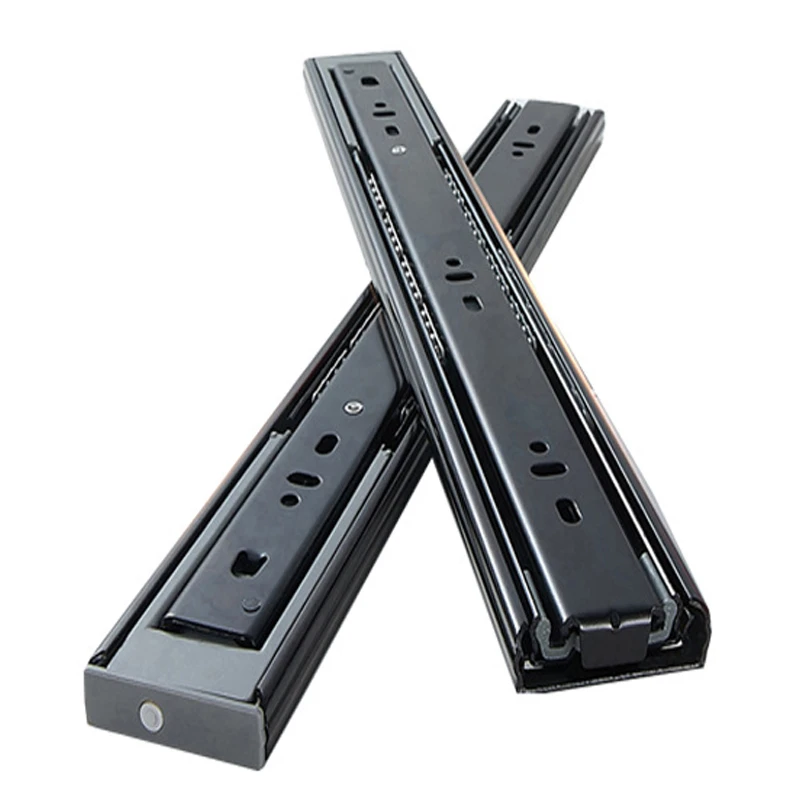
Before installing the drawer, channel your inner "tool expert": gather a Phillips screwdriver (an electric one saves effort), a pencil (for marking), a tape measure (for precise measurements), and a spirit level (to ensure the drawer isn't crooked). Regarding materials, bottom-mount drawer slides typically consist of three sections (outer rail, middle rail, and inner rail); remember to verify that the rails are a matching set and that the drawer face and cabinet body have pre-drilled mounting holes. Pro Tip: Lay a soft cloth on a smooth floor surface to prevent scratching the cabinet's finish during installation.
Step-by-Step Installation: The Perfect Union of Rails and Drawer
Secure the Outer Rails: Align the outer rails against the inner surface of the cabinet's side panels, then use a pencil to mark the screw hole positions (most slide kits come with a built-in hole template). Use a screwdriver to fasten the outer rails to the cabinet; ensure that the outer rails on both the left and right sides remain level, otherwise the drawer will bind or jam.
Assemble the Slide Rails: Slide the middle rail and inner rail sequentially into the outer rail; you should hear a distinct "click" sound indicating that they are seated correctly. Test the sliding motion to ensure it is smooth; if you encounter any resistance, you can slightly adjust the tightness of the screws.
Install the Drawer: Place the drawer on a flat work surface, align the inner rails with the mounting holes on the drawer's side panels, and secure them with screws. Be careful not to overtighten the screws; leave a little slack to allow for minor adjustments later.
Integrated Testing: Gently push the drawer into the cabinet, observing whether the rails align properly and if the drawer closes completely without making any unusual noises. If you notice the drawer sitting crookedly, you may need to adjust the outer rail screws or check to ensure the cabinet itself is level.
Fine-Tuning and Optimization: Ensuring "Silky-Smooth" Drawer Operation
Once the installation is complete, switch into "detail-oriented" mode:
Adjust the Damping: If your drawer slides feature a soft-close or buffering function, you can adjust the closing speed by rotating a small screw located at the end of the rail to prevent the drawer from slamming abruptly against the cabinet.
Check the Gaps: The gaps between the drawer and the surrounding cabinet frame should be uniform (approximately 2–3 mm). If the gaps appear excessively wide or uneven, it suggests that the slide rails were installed off-center and may require realignment. Lubrication and Maintenance: Periodically wipe dust from the drawer slides using a dry cloth. Applying 1–2 drops of cooking oil (or specialized lubricant) to the ball bearings on the slides can help extend their service life.
Tip: If the drawer makes a "squeaking" sound when pulled, it may be due to loose screws or a lack of lubrication on the slides; tightening the screws or applying lubricant will resolve the issue.
Send Inquiry